Pages

Sunday, 10 March 2013

Classification of Phylum Echinodermata


Phylum :- Echinodermata


Characters :- 


(i) Adult with radial & five rayed symmetry, while the larvae are bilaterally symmetrical.

(ii) The body is covered by calcareous ossicles or plates, often bearing projecting tubercles or spines.


SubPhylum :- Crinozoa


Characters :-


(i) Madriporite absent.

(ii) Radially symmetrical, possessing a cup shaped theca.


Class :- Crinoidea


Characters :-


(i) Arms are branched & bearing pinnules.

(ii) The ambulacral grooves radiates from the mouth & extend to the tip of the pinnules.


Examples :- Antedon (sea lily); Metacrinus;


Fig :- Antedon

Fig :- Metacrinus


SubPhylum :- Asterozoa


Characters :-


(i) Body is star shaped & remain unattached.

(ii) On the oral surface in the ambulacral groove, tube feet are present.


Class :- Asteroidea


Characters :-


(i) Arms are not sharply set off from the cetral dosc.

(ii) Anus & madriporite are present on the aboral surface.


Examples :- Asterias ; Asteropectin;


Fig :- Asterias


Class :- Ophiuroidea


Characters :-


(i) Arm sharply set off from the central disc.

(ii) Absence of ambulacral groove & arms are filled by vertebral ossicles.


Example :- Ophiura


Fig :- Ophiura


SubPhylum :- Echinozoa


Characters :-


(i) Radially symmetrical, globoid or discoid without arms or brachioles.

(ii) Madriporite & anus remain on the aboral surface.


Class :- Echinoidea


Characters :-


(i) Body more or less spherical, flattened orally/ aborally.

(ii) Aristotle's lantern, a apparatus used in feeding is mostly present.


Examples :- Echinus ; Arbacia;


Fig :- Echinus
Fig :- Arbacia


Class :- Holothuroidea


Characters :-


(i) Body elongated along oral/ aboral axis.

(ii) The surface of body may exhibit five ambulacral groove.


Examples :- Holothuria; Cucumaria;


Fig :- Holothuri


Fig :- Cucumaria


Saturday, 9 March 2013

Classification of Phylum Nematoda according to Ruppert & Barnes(1994)


Phylum :- Nematoda


Characters :- 


(i) They have perfectly cylindrical body adapted for living in minutes place.

(ii) Body cavity is pseudocoel, Cuticle thick & tough.

(iii) Circular muscle is absent, longitudinal muscles in 4 groups.

(iv) Anterior end bear sense organ amphid & posterior phasmid present.


Class :- Aphasmida


Characters :-


(i) Anterior end of body bear chemo receptor amphids, phasmid absent posteriorly.

(ii) Most are free living animal.

(iii) Excretory system relatively simple types.

(iv) Presence of cephalic setae & papillae.


Examples :- Trichurus; Trichenella;


Fig :- Trichenella

Fig :- Trichurus


Class :- Phasmida


Characters :-


(i) Possess anteriorly Amphids & posteriorly Phasmid.

(ii) Most are parasitic.

(iii) In the caudal region there is the presence of a pair of Phasmid.


 Examples :- Ascaris; Wuchereria; Ancylostoma;


Fig :- Ascaris
Fig :- Wuchereria bancrofti

Fig :- Ancylostoma


Sunday, 3 March 2013

Classification of Phylum Cnideria according to Ruppert & barnes(1994)


Phylum :- Cnideria


Character :- 


(i) Body diploblastic i.e, composed of two tissue layers, an outer epidermal (ectoderm) & an inner gastrodermis (endoderm) with several to many cell types & a less cellular mesoglea at the centre.
                   
(ii) Two different body forms may exist a 'medesa' (sexual) adapted for pelagic existence & a polyp(asexual) adapted for benthic existence.
                   
(iii)Short & slender tentacles encircles the mouth in one or more whorls.
                  
 (iv)The body composed of a special types of cell, called of Cnidocytes, containing stinging organelles called Nematocysts.
                   
(v) In the body there is an internal space for digestion, the gastrovascular cavity with the mouth as the only opening.


Class:- Hydrozoa


Characters :-


(i) Individuals are either exclusively polypoid or medusoid or constituted by both forms in the life cycle.

(ii) Mesoglea acellular.

(iii)Cnidocytes are confined to the epidermal layer.
                 
(iv)Gonads are usually ectodermal in origin.


Examples :- Hydra; Obelia; Physalia; Velella; Porpita;


Fig :- Obelia

Fig :- Hydra

Fig :- Porpita

Fig :- Physalia


Class:- Scyphozoa


Characters :- 


(i) Medusoid form is dominant in the life cycle, polypoid forms is very insufficant.
               
(ii) Mesoglea is cellular.
               
 (iii)Gonads are endodermal.
               
 (iv)The endodermal gastric tentacles are present.


 Examples :- Aurelia; Pilema; Pericolpa;


Fig :- Aurelia

Pilema


Class:- Cubozoa


Characters :- 


(i) Medusoid cnidarians with bells.
               
(ii) Body is distinctly flattened to form four sides.
                 
(iii) Bell margin simple.
                 
(iv) Presence of velum along the margin of the medusa.


Examples :- Carybdea; Chironex; Chiropsalmus;


Fig :- Carybdea

Fig :- Chirinex


Class:- Anthozoa


Characters :-


(i) Exist only in the polypoid form.
                 
(ii) Gonads are endodermal.
               
(iii) Stomodium strongly developed.
                 
(iv) Extending between the stomodaeum & the body wall there are mesenteries.


Examples :- Gorgonia(sea-fan); pennatulla(sea-pen); Corallium; Fungia;


Fig :- Gorgonia

Fig :- Pennatulla


Fig :- Corallium

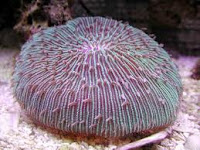
Fig :- Fungia


Saturday, 2 March 2013

Classification of Phylum Mollusca according to Ruppert & Barnes (1994)


Phylum :- Mollusca


Characters :-


(i) Bilaterally symmetrical, body soft, unsegmented, without a body cavity.
                 
(ii) Presence of a protective external dorsal shell. In some cases, it may be internal & covered by tissue or secondary reduced or lost.
                 
(iii)A visceral mass remains enclosed by a thick muscular fold of the body wall called mantle.
                 
(iv)Body monomeric & highly variable, essentially with an anterior head bearing eyes & sensory tentacles, a large ventral foot & posterior mantle cavity.


Class :- Aplacophora


Characters :-


(i) Worm like mollusca, body covered by cuticle, absence of shell.
                 
(ii) Foot absent or reduced to a ventral ridge.
                 
(iii) Head poorly marked & without eyes or sensory tentacles.
                 
(iv) There are no excretory organs.


Examples:- Chaetoderma; Neomenia; Proneomenia;


Fig :- Chaetoderma

Fig :- Neomenia


Class :- Polyplacophora


Characters :-


(i) Dorsal surface of body covered by eight shell plates.
                 
(ii) A broad muscular creeping foot is present on the ventral surface.
                 
(iii) Head is poorly developed. Eyes & tentacles is absent.
                 
(iv) Radula is large & bears many teeth.


Examples:- Chiton; Chaetopleura; Loricata;


Fig :- Chiton

Fig :- Loricata


Class :- Monoplacophora


Characters :-


(i) Bilaterally symmetrical body & covered by a shield-like shell.
                 
(ii) On the ventral side is a weakly muscular, circular foot surrounded laterally & posteriorly by an extensive mantle cavity.
                 
(iii) Head distinct but poorly developed & without sensory tentacles.


 Examples:- Neopilina; Monoplacophorus;


Fig :- neopilina

Fig :- Monoplacophorus


Class :- Gastropoda


Characters :-


(i) Visceral mass is twisted at 180 degree in an anticlockwise direction(torsion), relative to the head & foot.
                 
(ii) Shell is one piece & asymmetrically spiraled.
                 
(iii) A muscular foot is present below the digestive system & visceral mass.
                 
(iv) Head distinct with one or two pairs of tentacles & eyes. In the digestive system, buccal contain a scrapping radula.


Examples:- Pila; Patella; Aplysia; Achatina; Helix; Lymnaea; Limax; Doris; Murex;


Fig :- Aplysia
Fig :- Pila


Class :- Bivalvia


Characters :-


(i) Laterally compressed body enclosed within a pair of shell valves.
                 
(ii) Head indistinct & a radula is absent.
                 
(iii) Mouth provided with two pairs of labial palps.
                 
(iv) Relatively sedentary or even sessile.


Examples:- Mytilus; Pinctada; Lamellidens;


Fig :- Mytilus

Fig :- Picntada maxila


Class :- Scaphopoda


Characters :-


(i) Presence of tubular like snell,open at both ends.
                 
(ii) The elongated body completely enclosed by the mantle.
                 
(iii) The small proboscis like head lacks & sensory tentacles.


Example:- Dentalium;


Fig :- Dentalium


Class :- Cephalopoda


Characters :-


(i) Foot modified into a series of prehensile arms or tentacles & siphon.
                 
(ii) Shell absent or reduced & covered by the mantle in most species.
                 
(iii) This group has a well formed head bearing large eyes.
                 
(iv) Mouth possesses radula & jaws.


Examples:- Sepia; Loligo; Octopus;


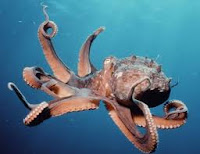
Fig :- Octopus

Fig :- Loligo